Orlando HVAC Air Conditioning
Get Estimate

AC maintenance Orlando FL that stops breakdowns before they start

Licensed tune-ups for every major brand, done right the first time


AC maintenance Orlando FL is the once-a-year service call that keeps your system alive through 95-degree afternoons and nonstop humidity. We clean the coils, test the capacitors, check the refrigerant charge, and clear the drain line before it backs up into your ceiling. If you have not had an AC tune up Orlando in the last 12 months, your system is running hotter and costing more than it should.

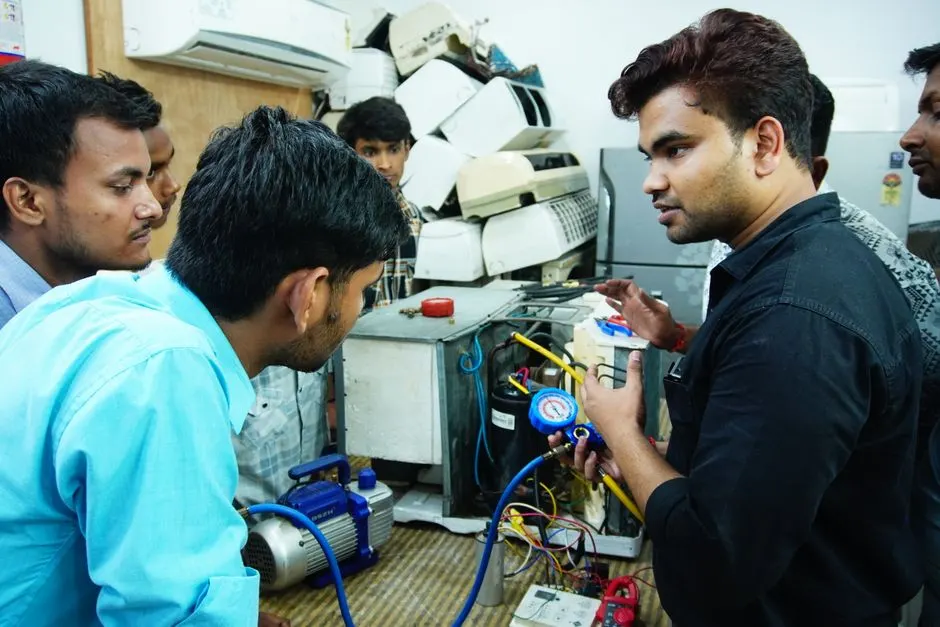
Participants learn AC repair during a hands-on session in Delhi, India.
Licensed Licensed & Bonded
Fully Insured Insured & Bonded
24/7 Emergency Same-Day Response
Warranty Backed 44+ Years Trusted in Orlando

What is included in every tune-up

A standard AC maintenance Orlando FL visit covers the full mechanical and electrical inspection of your cooling system. Repairs found during the visit are quoted separately before we start. Here is what you get on every call.

Coil and blower cleaning

We wash the evaporator coil with coil cleaner and comb the fins straight, then scrub the blower wheel and housing. A clean coil and blower restore the airflow your system was designed for and cut the runtime that drives your power bill.

Electrical component testing

Capacitors, contactors, and relays get tested with a multimeter against their rated microfarad values. Compressor amp draw is checked with a clamp meter against the nameplate. Weak parts get flagged before they fail and leave you without cooling.

Refrigerant charge check

Manifold gauges measure suction and liquid pressures, and we calculate superheat and subcooling to confirm the charge is correct. A system that is 10 percent low on R-410A loses capacity and works the compressor harder. We find it before it becomes a leak repair.

Drain line flush and float test

We flush the PVC drain line, test the float switch, and check the drain pan for cracks. In Orlando humidity, a clogged drain line is one of the most common causes of water damage to ceilings and closets. This step takes five minutes and prevents thousands in repairs.

Duct and insulation inspection

We check the flex duct runs, sheet metal joints, and duct insulation in the attic for tears, kinks, and disconnects. Leaky ducts in a 130-degree Orlando attic waste cooling and pull in humid air. We note anything that needs sealing or repair.

New filter and written report

We install a fresh air filter sized to your system and leave you a written report with the temperature split, amp draw, capacitor readings, and refrigerant pressures. You see exactly what we tested and how your system compares to spec.

What AC maintenance Orlando FL actually covers


AC maintenance Orlando FL is a full mechanical inspection and cleaning of your cooling system, not a quick filter swap. Our technicians pull the blower assembly, wash the evaporator coil, check the compressor amp draw with a clamp meter, verify refrigerant charge with manifold gauges, and test every capacitor and contactor for wear. We flush the PVC drain line, inspect the copper line set for rub-through, and check duct insulation for tears. A proper tune-up takes 60 to 90 minutes and catches the small failures that turn into August emergencies.

Orlando runs its air conditioning 10 to 11 months a year, which is roughly triple the runtime of a system in a milder climate. That constant load wears out capacitors, blower motors, and compressors faster here than almost anywhere in the country. Scheduling an air conditioning maintenance Orlando FL visit each spring, before the first 90-degree week, is the single cheapest way to avoid a mid-July no-cool call. Homeowners in Orange County who skip it usually pay for it later.

What happens during your tune-up visit

Every AC maintenance Orlando FL appointment follows the same five steps. You get a written checklist of what we tested, what we found, and what it will cost to fix anything that is worn.

01

Schedule

Call or book online — a real human picks up and confirms a 2-hour arrival window.

02

Diagnose

Licensed tech inspects on-site, then walks you through the cause and your options.

03

Fix

The job is completed to code and done right the first time — no shortcuts, no surprises.

04

Guarantee

Every job backed by a written workmanship warranty — and we stand behind it.

The tools and standards behind every visit

Tools & Equipment

Manifold gauges

Measure suction and liquid line pressures so we can calculate superheat and subcooling and confirm the refrigerant charge is correct for the outdoor temperature.

Clamp meter and multimeter

Test compressor amp draw against the nameplate rating and check capacitor microfarads, contactor points, and control voltage. This is how we catch a failing part before it fails.

Electronic leak detector

Pinpoints refrigerant leaks at brazed joints, Schrader ports, and coil bends. Finding the leak is the only way to fix a low charge permanently instead of topping it off every year.

Fin comb and coil cleaner

Straighten bent coil fins and strip the dust and biological film that blocks heat transfer. A clean coil is the single biggest factor in how well your system cools.

Duct cleaning vacuum

Pulls loose debris and dust from the return and supply runs during duct inspections, so the air reaching your rooms is not carrying attic dust with it.

Recovery machine and refrigerant scale

Recover refrigerant to EPA Section 608 standards and weigh in the exact charge when a repair requires opening the system. No guesswork, no venting.

Methods & Standards

ACCA Manual J and airflow standards

We follow ACCA standards for airflow and temperature split testing on every tune-up. That means we measure the actual performance of your system against its design spec, not just whether it turns on and blows cold air.

EPA Section 608 refrigerant handling

All refrigerant work is done under EPA Section 608 rules. We recover, weigh, and charge to the manufacturer's spec using a refrigerant scale, so your system runs at the exact charge it was designed for.

NATE-certified diagnostics

Our technicians hold NATE certification, which means they have passed independent testing on electrical, refrigerant, and airflow diagnostics. That training is why we find the real problem instead of replacing parts until something works.

Written tune-up checklist

Every visit follows the same documented checklist, and you get a copy. The report logs temperature split, amp draw, capacitor readings, and refrigerant pressures, so you can compare year over year and see exactly how your system is aging.

When to schedule your tune-up

01

Spring tune-up before the first 90-degree week in Orlando

What we do: We book March and April appointments specifically for this. The visit covers the full checklist, and if we find a weak capacitor or a low charge, you have weeks to fix it at normal pricing instead of calling us in a panic in July.

→ You go into summer with a system that has been tested, cleaned, and confirmed to spec. Most customers tell us the house cools faster and the bill is lower than the year before.

02

New home purchase in Winter Park or Baldwin Park

What we do: A pre-summer tune-up on a house you just bought tells you exactly what condition the system is in. We log the amp draw, charge, and temperature split so you know whether you have 10 years left or 2.

→ You get a written baseline for the equipment and a clear picture of upcoming costs. If something is failing, you find out while you still have negotiating room or warranty coverage.

03

System running but not keeping up in Dr. Phillips

What we do: When the house will not hit the thermostat setting, we run a full tune-up plus a duct inspection. In Orlando, the problem is often a dirty coil, a low charge, or duct leakage in the attic, not a system that needs replacing.

→ Most customers get their cooling capacity back without a replacement quote. If the system really is at end of life, we tell you that too, with the numbers to back it up.

04

Rental property in Kissimmee or near the theme parks

What we do: Short-term rentals cannot afford a no-cool call during a guest stay. We run scheduled tune-ups between bookings and provide a written report you can hand to the owner. Maintenance plan members get priority scheduling.

→ Fewer guest complaints, fewer emergency calls, and a documented maintenance history that protects your investment and your reviews.
How AC maintenance works in Orlando specifically

Orlando is one of the hardest climates in the country on an air conditioning system. Your unit runs 10 to 11 months a year, pulls gallons of humidity out of the air every day, and sits in an attic that hits 130 degrees in July. That combination wears out capacitors, blower motors, and compressors faster than almost anywhere else. It also means the drain line clogs more often and the coil gets dirtier faster. When we run an AC tune up Orlando FL near me call, we adjust the checklist for this climate: longer coil wash, closer look at the drain pan, and a hard look at duct insulation in the attic. If you are in a 1950s College Park bungalow with original ductwork or a newer Lake Nona build with a tight envelope, the maintenance priorities are different, and we know both. Florida HVAC license requirements and Orange County code shape how we document and repair every system we touch.

Neighborhoods We Serve

  • College Park

    Older homes with original or partially updated ductwork. We see more duct leakage and undersized returns here than anywhere else in the city.

  • Lake Nona

    Newer, tightly built homes with high-efficiency systems. These need precise charge and airflow checks because small errors show up fast in a tight envelope.

  • Downtown Orlando

    Condos and mid-rise units with packaged systems and limited attic access. Tune-ups here focus on coil cleaning and drain line service because access is tight.

  • Winter Park

    A mix of historic homes and new construction. We run into everything from 1970s Trane units to brand-new Daikin systems on the same street.

  • Dr. Phillips

    Larger two-story homes with zoned systems. We check both zones on every tune-up because the upstairs unit usually works harder and fails first.

Local Conditions We Plan For

  • Year-round runtime of 10 to 11 months

    Your system accumulates the wear of three normal seasons in one year. That is why we recommend a tune-up every 12 months here instead of every 18 to 24 months like cooler markets.

  • Attic temperatures above 130 degrees in summer

    Duct insulation breaks down faster, flex duct sags and kinks, and any duct leakage pulls superheated attic air into your supply. We inspect the attic runs on every visit.

  • High humidity and heavy pollen load

    The evaporator coil grows biological film faster, the drain line clogs more often, and filters load up in weeks instead of months. Coil cleaning and drain flushing are non-negotiable here.

  • Afternoon thunderstorms and power surges

    Lightning strikes and grid surges take out capacitors, control boards, and contactors. A tune-up checks all of them, and we can add a surge protector to the disconnect to reduce repeat failures.

12-year-old Trane running nonstop in College Park

Before

The homeowner called because the upstairs never got below 78 degrees and the power bill had climbed to $310 a month. The system had not been serviced in four years. The evaporator coil was matted with dust, the capacitor read 22 percent below spec, and the drain pan had a hairline crack.

After

We cleaned the coil, replaced the capacitor and drain pan, and confirmed the charge. The temperature split went from 11 degrees to 19 degrees. The house hit 72 by mid-afternoon, and the next month's bill came in at $245.

Maintenance: The homeowner joined our maintenance plan and now gets two visits a year. The system has run without a single no-cool call since, and the yearly report shows the capacitor holding steady.

Before

A two-year-old home in Lake Nona was not keeping up on the second floor. The builder's installer had charged the system by feel, not by weight. Superheat was 8 degrees off spec, and the compressor was pulling 15 percent over its rated amps. The homeowner was told the system was fine.

After

We recovered the refrigerant, weighed in the correct charge to the manufacturer's spec, and rechecked superheat and subcooling. Compressor amps dropped back to nameplate. The second floor now holds 72 degrees on a 96-degree afternoon.

Maintenance: Yearly tune-ups keep the charge verified and catch any slow leak early. The homeowner also added a surge protector at the disconnect after a nearby lightning strike took out a neighbor's board.

Before

A short-term rental near the theme parks had a guest complaint about a wet ceiling in the hallway. The drain line had clogged with algae over the summer, and the pan had overflowed twice. The property manager had no maintenance history on the system.

After

We cleared the drain line, replaced the float switch, and dried out the pan area. We also cleaned the coil and tested the electrical components. The system has run through two full rental seasons since with no water issues and no guest complaints.

Maintenance: The property is now on our commercial maintenance plan with tune-ups scheduled between bookings. The written report gives the owner a clear record of what was done and when.

Problems a yearly tune-up prevents

Most Orlando no-cool calls trace back to something a tune-up would have caught months earlier. These are the failures we see most often, and what happens if they are ignored.

Problem

Weak capacitor that fails on the hottest day

A capacitor that has drifted 20 percent below its rated microfarads will run until the first 95-degree afternoon, then fail and leave you with no cooling. That is always a same-day emergency call at peak pricing.

Our Fix

We test every capacitor with a multimeter on each visit. If it reads low, we replace it for a fraction of what an emergency call costs. Our trucks carry the common values for Carrier, Trane, Lennox, and Goodman systems, so it gets done on the spot.

Problem

Clogged drain line flooding the ceiling

Orlando humidity means your system pulls gallons of water a day out of the air. When the PVC drain line clogs with algae, the pan overflows into your ceiling, drywall, and insulation. That is a $1,500 to $4,000 repair.

Our Fix

Every tune-up includes a full drain line flush and a float switch test. If we find a slow drain or a cracked pan, we clear it or replace it before it becomes a water damage claim. This is the cheapest insurance you can buy for your home.

Problem

Dirty coil driving up power bills

A coil coated with dust and biological film cannot transfer heat. The compressor runs longer, the house never quite hits the thermostat setting, and your bill climbs 15 to 25 percent without any obvious symptom.

Our Fix

We pull the coil and wash it with coil cleaner on every visit. After a full clean, most Orlando homes see the temperature split return to 18 to 22 degrees and the runtime drop noticeably. You feel it in the first week.

Problem

Refrigerant leak running the compressor dry

A slow refrigerant leak drops the charge a few ounces a month. The system still cools, just not as well, so most homeowners do not notice until the compressor overheats and seizes. A compressor replacement runs $1,800 to $2,800.

Our Fix

Manifold gauge readings and superheat calculations catch a low charge long before the compressor is damaged. If we find a leak, we locate it with an electronic leak detector and quote the repair before any refrigerant is added.

Why Orlando homeowners book a yearly tune-up

Why Orlando homeowners book a yearly tune-up

A maintained system lasts longer, cools harder, and costs less to run. Here is what a yearly AC service and tune up actually does for your house.

  • Lower monthly power bills

    A dirty evaporator coil and a weak capacitor force your compressor to run longer to hit the same thermostat setting. After a full clean and electrical test, most Orlando homes see a 10 to 15 percent drop in cooling cost. On a $220 summer bill, that is real money back in your pocket every month.

  • Fewer August breakdowns

    Roughly 8 out of 10 no-cool calls we run in July and August trace back to a part that was already failing in March. A spring AC check up Orlando catches a bulging capacitor or a failing blower motor while it is still cheap to fix. You avoid the emergency rate and the 100-degree house.

  • Longer equipment life

    A well-maintained system runs 15 to 20 years in Central Florida. A neglected one often quits at 10 or 12. That gap is worth $6,000 or more in avoided replacement cost. Cleaning coils, keeping the charge correct, and replacing worn contactors is how you get the full life out of the unit you already paid for.

  • Cleaner air indoors

    Your air handler pulls every bit of Orlando pollen, dust, and humidity through the filter and coil. When the coil is dirty or the drain pan is growing biological film, that stuff circulates through your bedrooms. A tune-up includes coil cleaning, drain flush, and a filter change, which keeps the air you breathe noticeably cleaner.

Licensed, certified, and local since 1982

Licensed & Certified

  • NATE Certification — issued by North American Technician Excellence
  • EPA Section 608 Universal — issued by U.S. Environmental Protection Agency
  • Florida HVAC License (Class A) — issued by Florida Department of Business and Professional Regulation
  • AHRI Certification — issued by Air-Conditioning, Heating, and Refrigeration Institute
  • OSHA Safety Compliance — issued by Occupational Safety and Health Administration

Verified Reviews

Google ★★★★★4.9

Booked a spring tune-up on our 14-year-old Carrier. The tech found a weak capacitor and a drain line that was about to clog. Fixed both on the spot for under $200. The house cooled better than it has in years. Honest, no upselling.

Yelp ★★★★★4.8

We have used Orlando HVAC Air Conditioning for three years on our rental properties. Their tune-up reports are detailed and they never push repairs that are not needed. Scheduling is easy and they show up on time.

BBB ★★★★★4.9

After a bad experience with another company, we switched to these guys. The tune-up was thorough, the price was exactly what was quoted, and they explained everything in plain language. Our August bill dropped $50.

Google ★★★★★5.0

Called for a tune-up before summer and they caught a cracked drain pan before it leaked into our ceiling. That alone saved us thousands. The tech was clean, fast, and answered every question. Highly recommend for Orlando homeowners.

What Orlando customers say

Real experiences from customers who chose our AC Maintenance & Tune-Ups services.

“Our 12-year-old Trane was running nonstop and the upstairs never got below 78. The tech found a weak capacitor and a coil that had never been cleaned. After the tune-up the house hit 72 by 4 p.m. and our July bill dropped about $40. Should have booked this years ago.”

M

Marcus T.

Homeowner, College Park

“We signed up for the maintenance plan after our neighbor's compressor died in August. Two visits a year, and they actually show up when they say. Last visit they caught a cracked drain pan before it leaked into the ceiling. That alone paid for the plan.”

P

Priya R.

Homeowner, Lake Nona

“I manage six rental units and use Orlando HVAC Air Conditioning for all of them. Their tune-up report tells me exactly what is worn and what can wait, which makes budgeting easy. No upselling, no pressure. They have been doing this since 1982 and it shows.”

D

Dave K.

Property Manager, Downtown Orlando

Frequently Asked Questions

Real answers to the questions we hear most often from local homeowners and property managers.

How often should I get AC maintenance in Orlando FL?
Once a year, ideally in March or April before the first 90-degree week. Orlando systems run 10 to 11 months a year, so the wear adds up faster than in cooler markets. If your system is older than 10 years or you have pets, twice a year is worth it. Book an annual AC maintenance in Orlando Florida visit and you will catch most failures while they are still cheap.
How much does an AC tune up cost in Orlando?
Typical 2026 pricing in Orlando runs $89 to $189 for a standard single-system tune-up, and $150 to $300 for a two-system home. Maintenance plan members pay less per visit. If the technician finds a bad capacitor or a low refrigerant charge, that repair is quoted separately before any work starts. The tune-up itself is the cheapest line item in HVAC.
What is included in AC maintenance in Orlando Florida?
A full tune-up includes coil cleaning, blower cleaning, capacitor and contactor testing, refrigerant charge verification with manifold gauges, drain line flush, duct inspection, thermostat calibration, and a new air filter. We log the amp draw, temperature split, and superheat readings on a written report. Anything outside that scope, like a refrigerant leak repair or a compressor replacement, gets quoted before we touch it.
Do you offer AC maintenance plans in Orlando?
Yes. Our plan includes two tune-ups a year, priority scheduling, 15 percent off repairs, and no overtime charges on after-hours calls. Members get same-day service on no-cool calls even in July and August when the schedule is packed. Call 689 315 0679 and we will set up your first visit and lock in the plan pricing.

Related Services

AC Repair

When a tune-up turns up a failing capacitor, contactor, or blower motor, we fix it on the same visit. Our trucks carry the common parts for Carrier, Trane, Lennox, and Goodman systems, so most Orlando AC repairs finish in one trip instead of two.

View AC Repair

Emergency AC Repair

If your system quits at 9 p.m. in August, we run 24/7 emergency calls across Orlando. Maintenance plan members get priority dispatch. A yearly tune-up is the best way to keep your system off our emergency list in the first place.

View Emergency AC Repair

AC Installation & Replacement

When a system is past saving, we size and install the replacement using ACCA load calculations, not guesswork. We handle R-410A and R-32 refrigerant systems, pull the Florida permit, and register the AHRI certification for your warranty.

View AC Installation & Replacement

Heating Repair

Orlando winters are short but real, and heat pumps that sat idle all summer often fail on the first cold night. A fall tune-up checks the reversing valve, defrost board, and auxiliary heat strips before you need them.

View Heating Repair

Heat Pump Services

Heat pumps are the most common system in Central Florida because they cool and heat. They need specific maintenance checks on the reversing valve and defrost cycle. Our tune-up covers both, so your heat pump is ready for either season.

View Heat Pump Services

Ductless Mini-Splits

Mitsubishi Electric and Daikin mini-splits need their own maintenance routine: filter cleaning, coil wash, and condensate pump check. We service them the same way we service central systems, with the same written report.

View Ductless Mini-Splits

Book your AC maintenance Orlando FL visit today

One tune-up now saves you an emergency call in August. Call 689 315 0679 and we will get you on the schedule this week, with upfront pricing and a written checklist of everything we tested.

Call Now Schedule My Tune-Up

Contact Our Orlando HVAC Team

Call us any time, day or night, and a live dispatcher will schedule your visit. We run same-day appointments across Orlando and the surrounding communities, and we answer the phone 24/7 for emergencies. Reach us at 689 315 0679 or send an email and we will get back to you fast.

Or call us right now at 689 315 0679 — we answer.

Orlando HVAC Air Conditioning


  • Phone

    689 315 0679
  • Address

    6000 N Orange Blossom Trl, Orlando, FL 32808

  • Hours

    Mon–Fri: 7AM – 7PM
    Sat: 8AM – 4PM
    Sun: Emergency Only
    24/7 Emergency Available

Call 689 315 0679 Get Quote
Call Quote